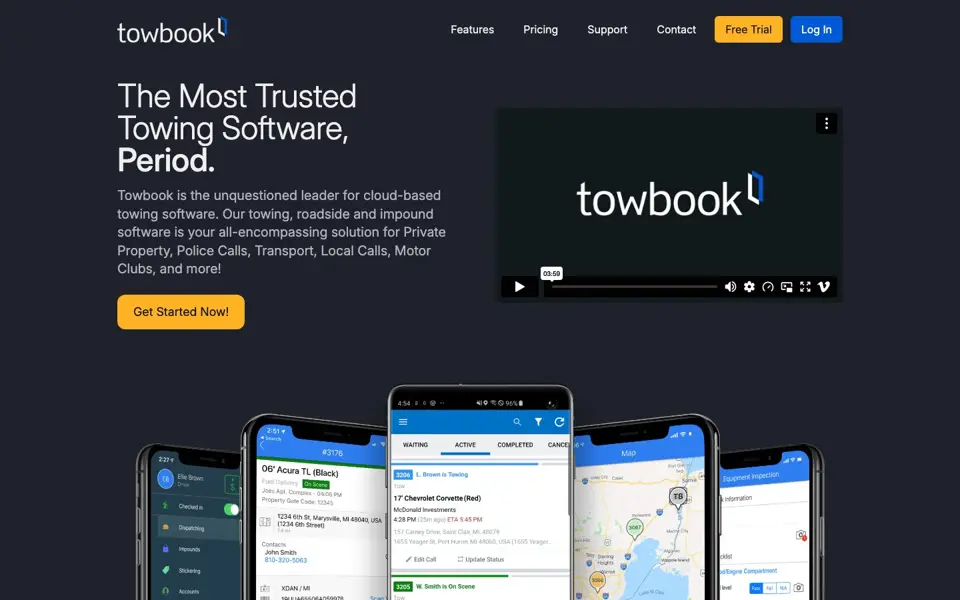
Towbook
Built For This Trade- PriceFrom $109
Towing CRM and software, checked November 2026
2 CRMs built only for towing and 2 multi trade CRMs that publish a towing page. We compared each towing page against the same vendor's other trade pages. 2 of 2 read like the same page with the trade name swapped.
A tow call comes in from a motor club, a police rotation, a body shop, a private property account or a driver who found you on Google. Motor club calls arrive through the club's dispatch system with a set rate and a set time to arrive. Dispatch picks the closest truck that fits the job, whether that is a light duty wrecker, a flatbed or heavy duty. The driver accepts, rolls, and updates the status at each step, en route, on scene, hooked, and dropped. At the scene the driver takes photos of the vehicle from every side before hooking it. If the car goes to your yard it becomes an impound, with daily storage, release paperwork and owner notices on a deadline. Billing splits several ways. Motor clubs pay on their schedule, police tows may bill the owner, and cash calls pay before the hook.
These tools were made for towing businesses first. Their screens use your words, not sales words.
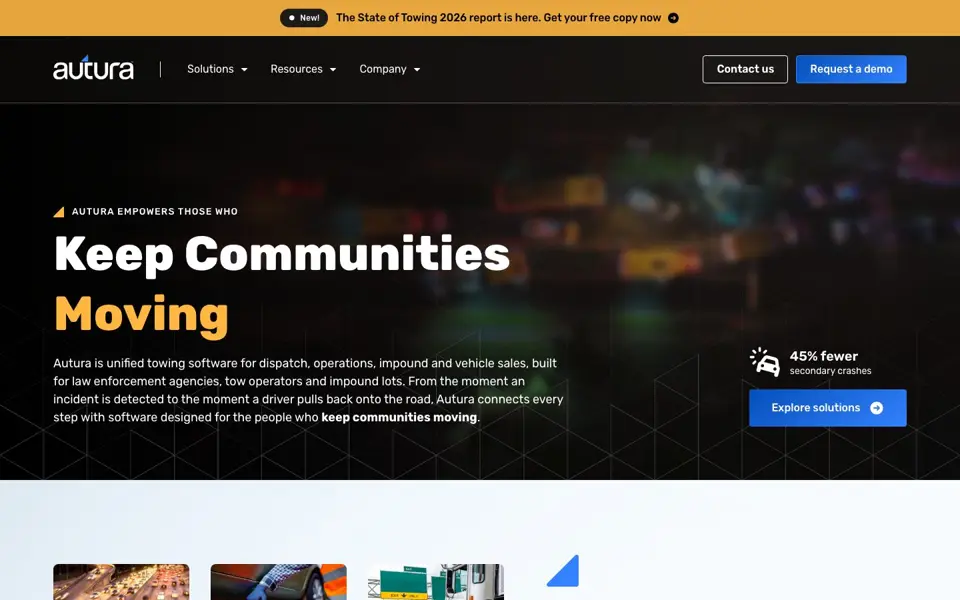
Each of these sells to many trades and has a page aimed at towing. We screenshot that page and compare its text with the same company's pages for other trades. Sorted from most real to most swapped.
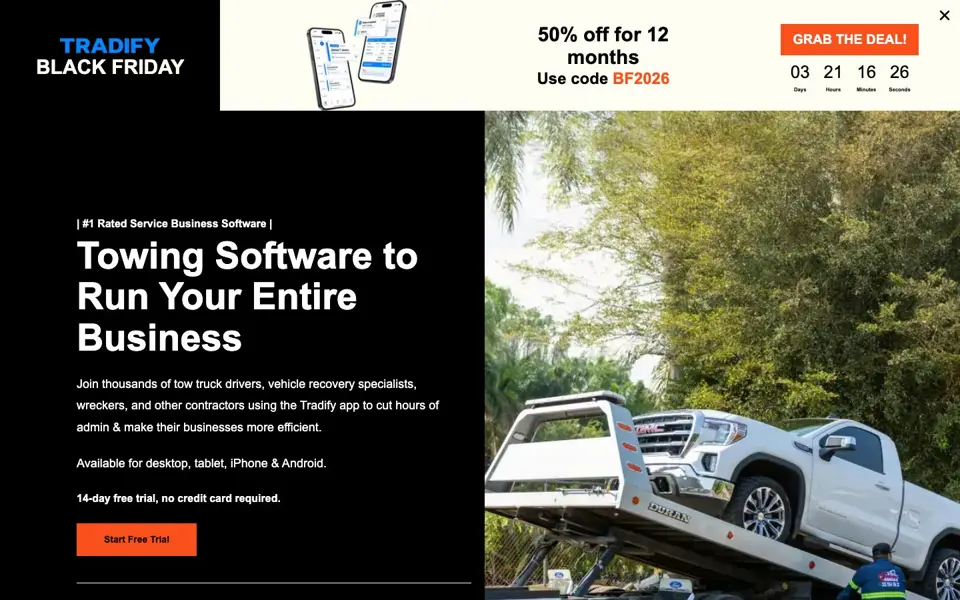
Their headline for this trade, #1 Rated Service Business Software | Towing Software to Run Your Entire Business

Their headline for this trade, Towing Software
Workiz publishes a towing page. These sentences on it also appear on its pages for other trades, with only the trade word changed. We replaced the trade word with a marker so you can see it.
For many tow companies, motor club work is the bulk of the calls. Jobs need to flow in from the club's system straight onto your board, with the rate, the arrival window and the member info. Typing them in by hand loses minutes, and missing the arrival time can cost you the call and your standing with the club.
Demo test. Ask the rep to show a motor club job landing on the board without anyone typing it.
A flatbed call cannot go to a wheel lift and a semi cannot go to a light duty truck. The board has to show every truck on a map with its type, status and current call. Without it, dispatch is a person yelling into a radio, and the wrong truck shows up while the customer waits on the shoulder.
Demo test. Have the rep assign a call and show how the system filters trucks that can do it.
Claims that you scratched a bumper or bent a wheel are part of the business. Drivers need to take photos before hooking and after dropping, with time and location saved on the call. If photos sit on a driver's personal phone, you have nothing to show when the owner or the insurer pushes back.
Demo test. Ask to see a closed call with before and after photos stamped with time and GPS.
Once a car is in your yard, the clock starts on storage fees, lien notices and release rules set by your state. The tool needs to track days stored, required notices and who is allowed to pick up the vehicle. Miss a notice deadline and you may not be able to collect or sell the car later.
Demo test. Ask the rep to show an impounded vehicle with storage days, notices sent and release status.
A motor club pays a set rate later, a police rotation tow may bill the owner, a body shop gets a monthly statement and a cash customer pays before the hook. One generic invoice screen cannot handle that. Without account rules, money from clubs and accounts slips through and nobody notices for months.
Demo test. Ask to see the same day's calls broken out by motor club, police, account and cash.
Most tow drivers are paid by the call, a percentage, an hourly rate or a mix. The tool should figure driver pay from closed calls so payroll does not take a full day of spreadsheets. When pay is figured by hand, mistakes pile up and good drivers leave for the outfit down the road.
Demo test. Have the rep run a weekly driver pay report from closed calls.
Police and city rotation lists come with their own rules, rates and paperwork. You may need to log the agency, the case number, the officer and the hold status on every call. If that data is missing when the agency audits you, you can be pulled off the rotation list.
Demo test. Ask to see a police tow ticket with agency, case number and hold status fields.
Towing software is often priced per truck or per driver each month, and some tools also charge for dispatcher seats. Motor club connections, impound modules, GPS tracking and texting can be included or sold as add ons, so ask what is in the base plan. Card processing usually costs extra per payment. Get the price for your current fleet and for a few more trucks.
Public threads where towing owners and techs talk about the CRMs they run. Each links to the original so you read it in their words.
Thread title as posted. Open it to read what owners said.
What do y'all think about the TowBook software?
Thread title as posted. Open it to read what owners said.
Thread title as posted. Open it to read what owners said.
Thread title as posted. Open it to read what owners said.
Dispatchers - what's your system for tracking driver locations?
Thread title as posted. Open it to read what owners said.
What towing dispatch software are you actually using?
Thread title as posted. Open it to read what owners said.
Towing for multiple businesses
Thread title as posted. Open it to read what owners said.
Thread title as posted. Open it to read what owners said.
Monthly Google searches in the United States, {SEEN}. Cost is what advertisers pay per click, which shows how hard vendors fight for that search.
| Search | Per month | Ad cost per click |
|---|---|---|
| towing software | 140 | $12.80 |
| towing management software | 70 | $23.65 |
| towing business software | 40 | $23.05 |
| best towing software | 10 | $11.54 |
Look for a tool built for towing, not a general field service app. It should pull in motor club jobs, show every truck on a live map by type, handle impounds and storage, and split billing by motor club, police and cash. Run a busy Friday night in the demo. If the rep cannot show you a stack of live calls moving across the board, keep looking.
Many tow tools connect to the big motor clubs so calls drop right onto your dispatch board with the rate, the member and the arrival window. Your drivers then update status in the tool and it reports back to the club. Ask which clubs the tool connects with, since not every tool works with every club. Retyping club calls by hand is slow and causes missed arrival times.
The good ones do. They track when the car came in, how many days it has been stored, what notices went to the owner and lienholder, and who signed for the release. Each state has its own rules on notice timing and fees, so the tool should let you set those up. If impounds live in a paper log, you will lose storage money.
Each kind of call needs its own rules. Motor clubs pay a set rate on their own schedule, so you track what is owed and match payments. Police rotation calls often bill the vehicle owner at a set rate with a case number on file. Body shops and property managers usually get a monthly statement. A good tool sorts all of this automatically by account.
Yes, most tow focused tools can. You set up each driver's pay rule, like a percentage of the call, a flat rate per call, hourly or a mix. The tool then figures pay from closed calls for the week. This saves hours of spreadsheet work and cuts down on pay fights, since every driver can see exactly which calls they were paid for.
Photos protect you from damage claims. A driver should shoot all four sides, the wheels and any existing damage before hooking, then again at the drop. The tool should save the photos to the call with time and GPS. When an owner says you dented the door, you pull up the photos instead of paying for a repair you did not cause.