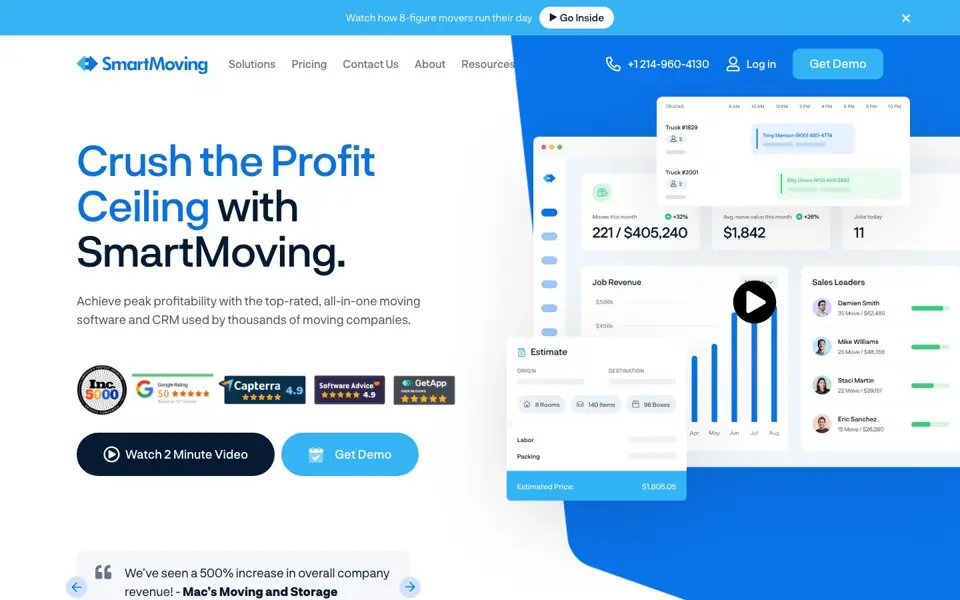
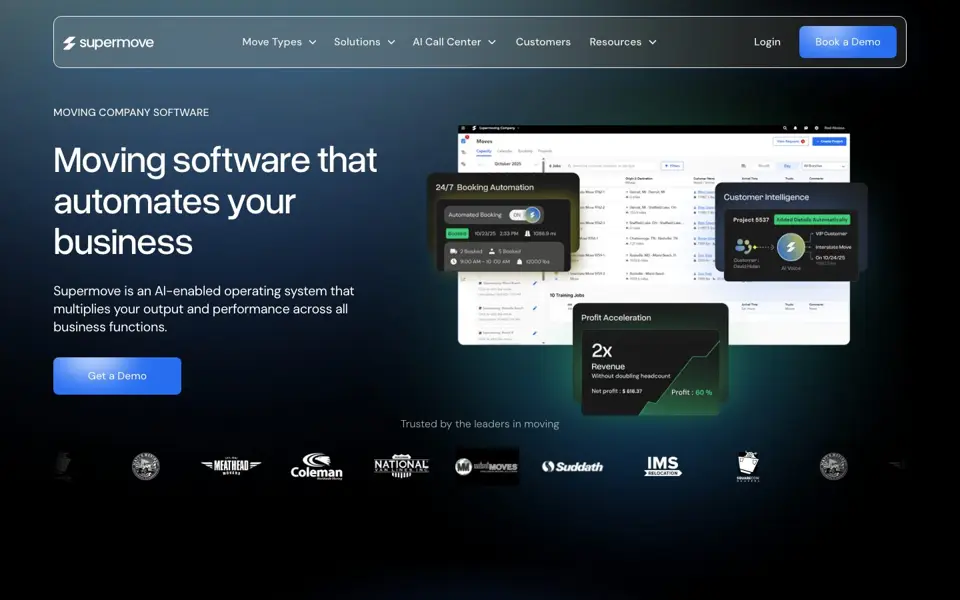
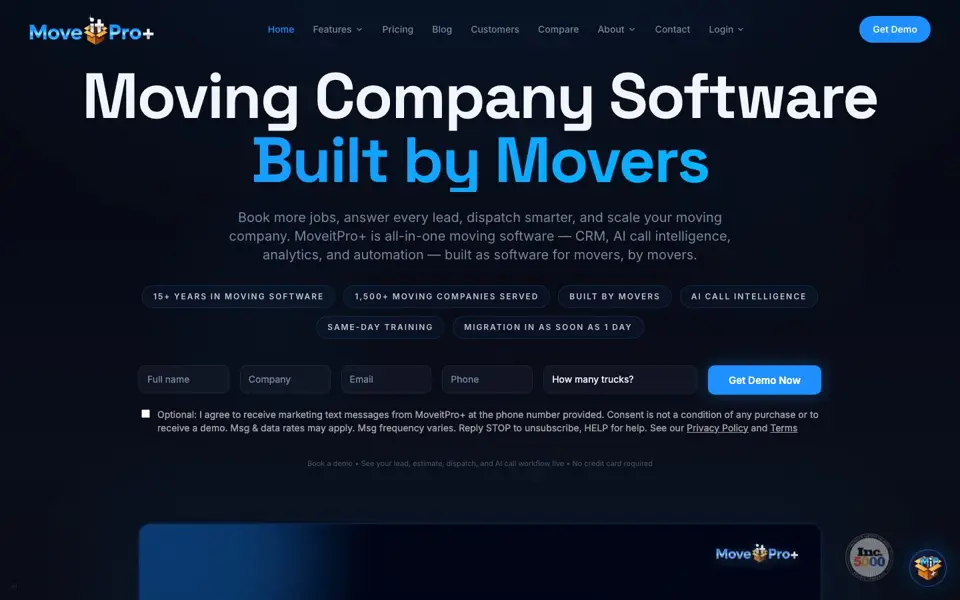
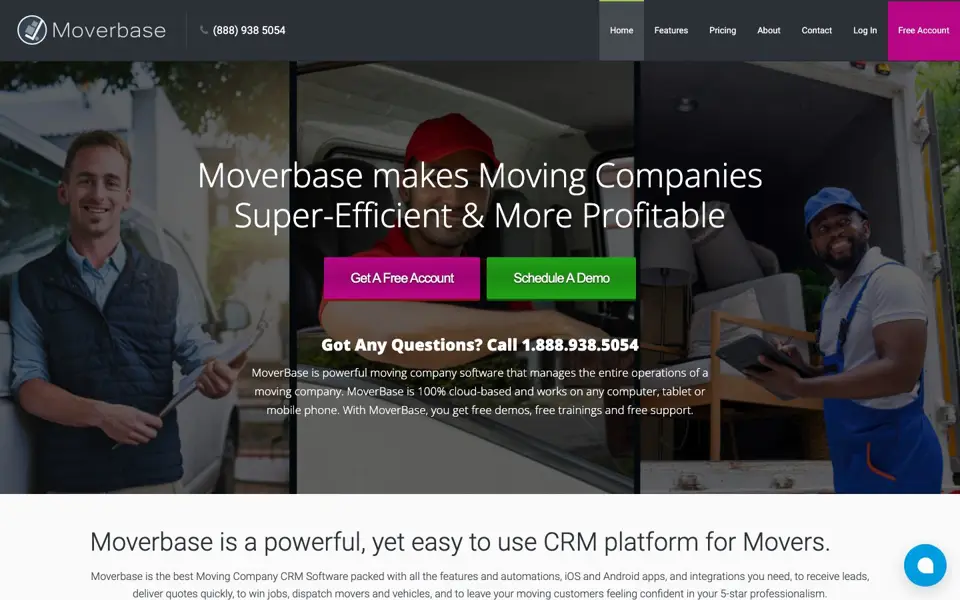
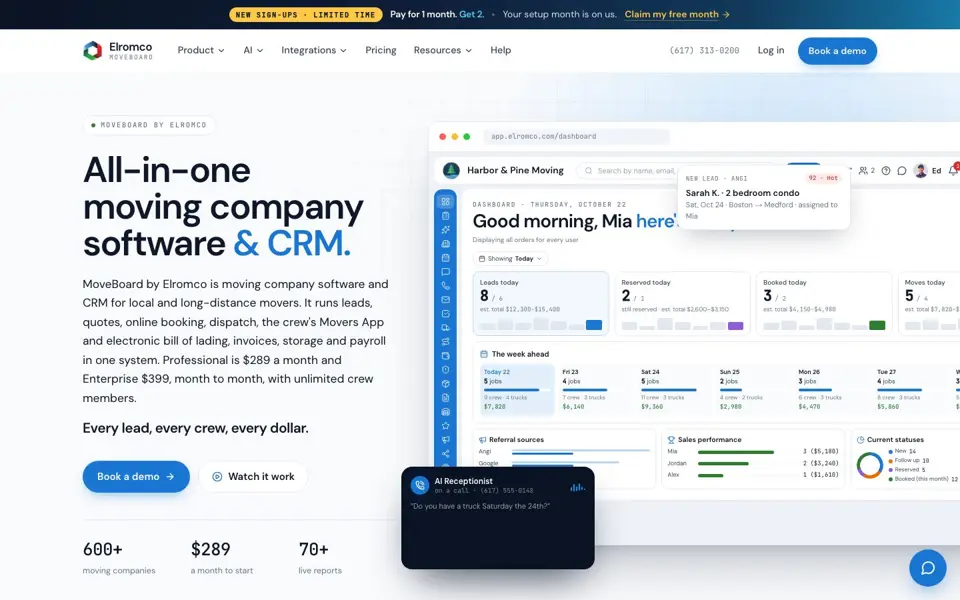
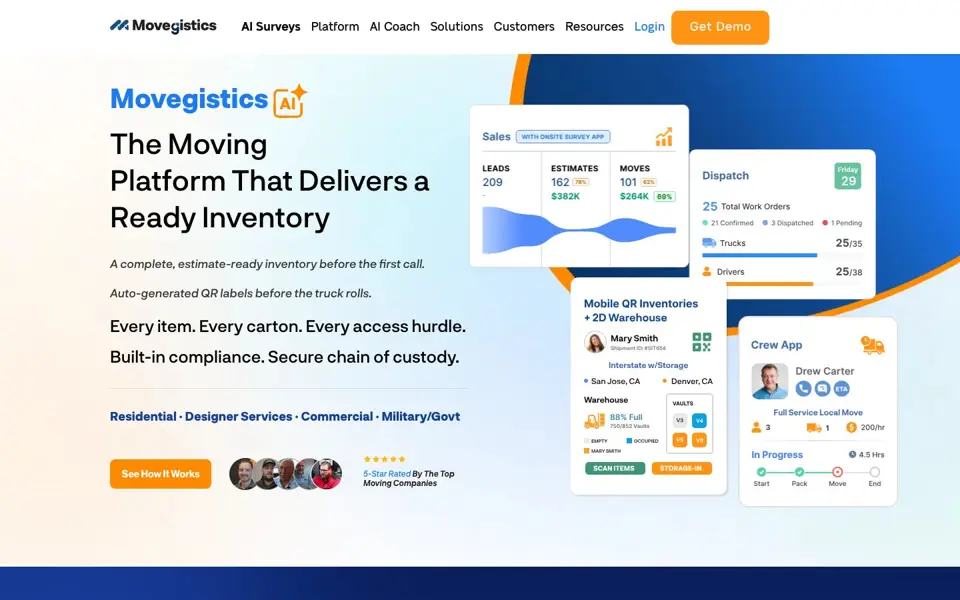
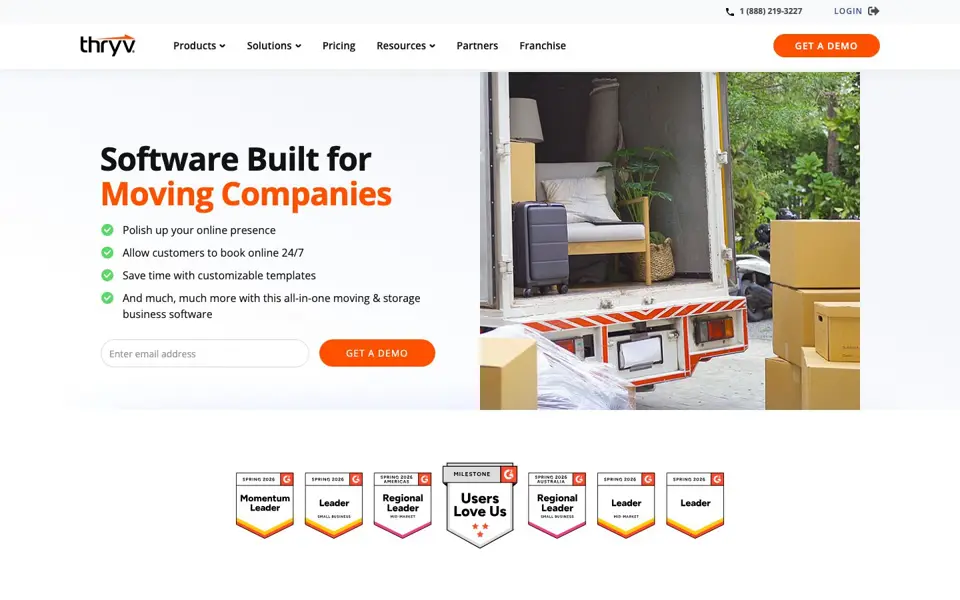
6 CRMs built only for moving and 4 multi trade CRMs that publish a moving page. We compared each moving page against the same vendor's other trade pages. 2 of 4 read like the same page with the trade name swapped.
Built for the trade
6
Generic vendors with a page
4
Pages that were swapped
2 of 4
Top search
movers software, 720 a month
How A Moving Job Actually Moves
A move starts as a lead from a web form, a phone call or a lead service, often with only a move date and two zip codes. Speed matters because the customer asked three other movers too. The sales rep calls back, builds an inventory of rooms and big items, either on the phone, by video or with an in home survey, and figures the weight or cubic feet, the crew size, the truck and the hours. The estimate goes out as hourly, binding or not to exceed, depending on the move and the state. Once booked, the customer pays a deposit and the move goes on the calendar with a truck and crew. On move day the crew does a walkthrough, the customer signs the bill of lading, and items get padded and loaded. Long distance moves add a delivery window. At the end the customer signs, pays the balance and any damage claims get logged.
Built For Moving
These tools were made for moving businesses first. Their screens use your words, not sales words.
Each of these sells to many trades and has a page aimed at moving. We screenshot that page and compare its text with the same company's pages for other trades. Sorted from most real to most swapped.
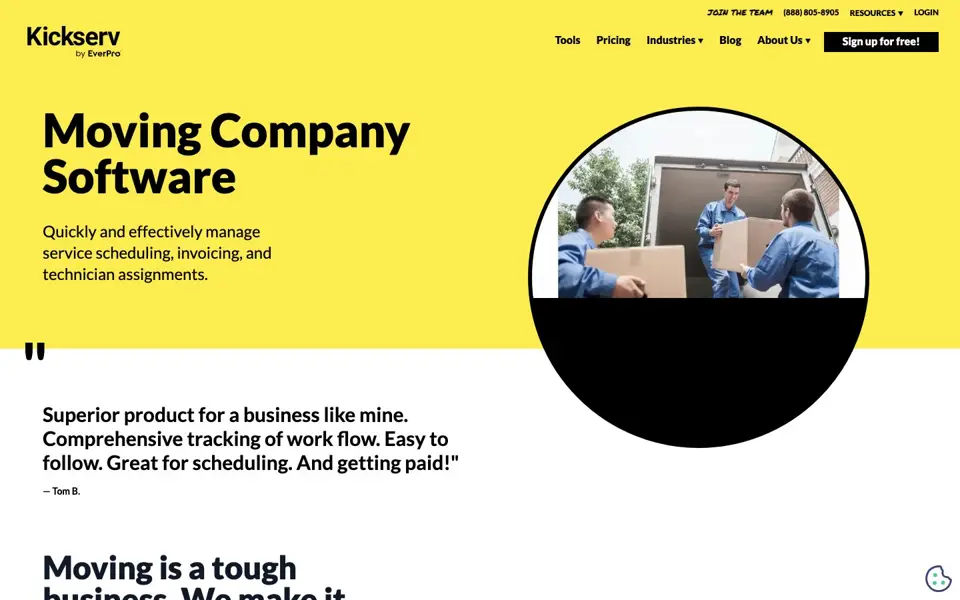
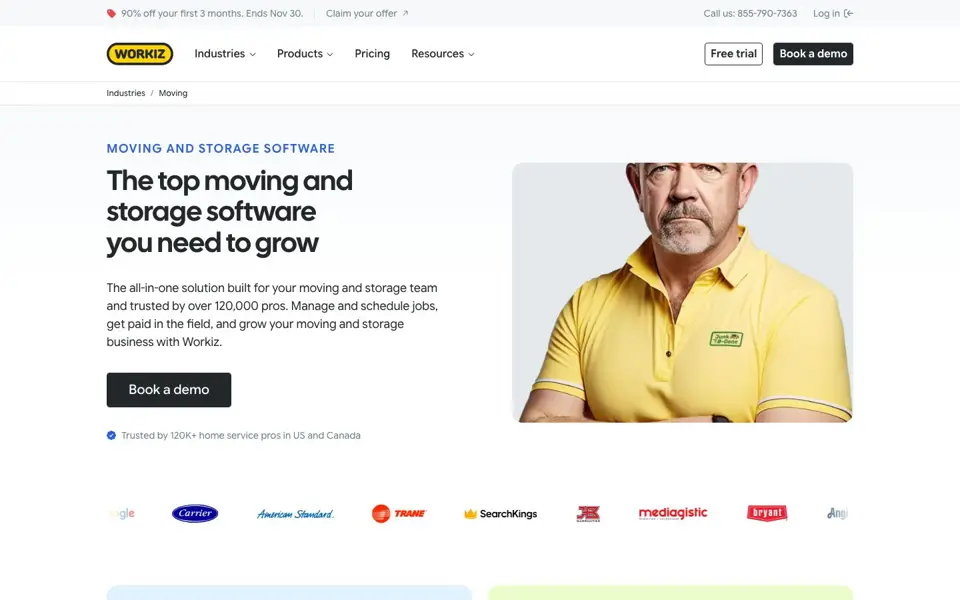
Kickserv page for moving, as captured November 2026
Tradify publishes a moving page. These sentences on it also appear on its pages for other trades, with only the trade word changed. We replaced the trade word with a marker so you can see it.
can tradify be used as real-time [trade] management software for [trade] contracting businesses?
does tradify's [trade] management software have accounting software integrations?
can my customers accept quotes for my [trade] services with online booking?
Every price in moving comes from what is being moved. The rep needs to build an inventory by room with standard items that carry a set weight or cubic feet. Without that, crews show up with a truck too small or not enough people, and the move runs long while the customer argues about the bill.
Demo test. Ask the rep to build an inventory for a two bedroom apartment and show the total weight or cubic feet.
Estimate Types That Match The Law
Local hourly moves, binding estimates and not to exceed estimates all work differently, and interstate moves have federal paperwork rules. The tool needs to produce the right estimate and the right documents for each type. Getting this wrong opens you up to complaints and fines, not just an unhappy customer.
Demo test. Ask to see an interstate estimate and the paperwork the tool creates with it.
Fast Lead Response
Moving leads shop around hard and the first mover to call back often wins. The tool should alert the rep the second a lead comes in and send an automatic text right away. If leads sit in an inbox for an hour, you are paying for leads that someone else books.
Demo test. Submit a test lead during the demo and time how fast the alert and text go out.
Truck And Crew Calendar
On busy days at the end of the month, every truck and every mover is booked. The calendar has to show trucks and crews side by side so you never sell a move you cannot staff. Overbooking means a family sitting in an empty house waiting for a truck that is not coming.
Demo test. Ask the rep to show a busy Saturday with trucks and crew counts and try to overbook it.
Digital Bill Of Lading And Signatures
The bill of lading is the contract for the move. The crew needs the customer to sign it on a tablet at the start, note any existing damage, and sign again at delivery. Paper forms get lost in the truck and you have no proof when a customer disputes the bill or a claim.
Demo test. Ask to see a signed bill of lading with time stamps and damage notes on a completed move.
Claims Tracking
Some damage claims happen even on good moves. The tool should log the claim, the item, photos, the valuation the customer chose and the result. Without a claims record you cannot see which crews break things most, and slow claim handling turns into public complaints.
Demo test. Ask the rep to open a damage claim on a past move and show its status.
Signs It Is Generic
Calls a booked move a "closed deal" and stops tracking there
No inventory builder, just a price field
No difference between local hourly and interstate estimates
Schedules people but not trucks
Systems It Should Connect To
FMCSA and USDOT records
Yembo video surveys
Moving.com leads
Unpakt
HireAHelper
Google Street View
QuickBooks
Stripe
Fleet GPS trackers like Samsara
What It Costs
Moving software is often priced per user each month, with sales reps and office staff counted, and sometimes by the number of trucks or moves. Lead service fees are separate and come from the lead companies, not your CRM. Video surveys, texting, online booking and claims tools may be extra. Card processing usually costs per payment. Ask how the price changes in your busy summer months.
Monthly Google searches in the United States, {SEEN}. Cost is what advertisers pay per click, which shows how hard vendors fight for that search.
Search
Per month
Ad cost per click
movers software
720
$39.93
moving company software
720
$39.93
crm for movers
110
$37.29
movers crm
110
$37.29
best moving company software
50
$72.10
best crm for moving company
30
$31.43
crm for moving company
30
$53.68
moving company crm
30
$53.68
moving company crm software
20
$11.28
moving company scheduling software
10
Questions People Ask
What is the best CRM for moving companies?
The best one handles fast lead follow up, room by room inventories, the right estimate type for local and long distance moves, and truck and crew scheduling. It should also do signed bills of lading on a tablet and track damage claims. Ask to see a lead go from web form to booked move in the demo. A general sales CRM will not cover move day.
How do moving companies estimate a move?
They build a list of items by room, and each item carries a typical weight or cubic feet. Software adds it up and suggests the truck, crew size and hours. Many movers now use video surveys so the customer can show the home from a phone. The estimate type, like hourly, binding or not to exceed, depends on the move and local rules.
How fast should a moving company respond to leads?
As fast as you possibly can. Customers usually request quotes from several movers at once and book the one that calls back first with a clear answer. Set your software to text the lead right away and alert a rep. Then track response times by rep. Slow callbacks are one of the biggest reasons paid leads do not turn into moves.
Do interstate movers need special software features?
Yes. Interstate moves come with federal rules on estimates, paperwork and delivery windows, and you need your USDOT details on documents. The software should create the right forms, track weight tickets and manage delivery spreads. Local only movers can get by with simpler tools, but if you cross state lines, ask the vendor exactly how they handle it.
Can moving software track damage claims?
Good ones do. You log the item, photos, the valuation coverage the customer picked and the crew on the move, then track the claim to a result. Over time this shows which crews or items cause the most claims. Handling claims quickly and in writing also keeps them from turning into public complaints and bad reviews.
How do moving companies schedule trucks and crews?
Use a calendar that books trucks and people together. Each move gets a truck size and a crew count, and the tool shows when you are at capacity. The end of the month and summer weekends fill up fast, so you need to see this clearly before a rep books one more move. Some tools also track driver hours and truck maintenance.