
Auto Body CRM and software, checked November 2026
CRM For Auto Body
4 CRMs built only for auto body and 1 multi trade CRMs that publish a auto body page. We compared each auto body page against the same vendor's other trade pages. 1 of 1 read like the same page with the trade name swapped.
- Built for the trade
- 4
- Generic vendors with a page
- 1
- Pages that were swapped
- 1 of 1
- Top search
- collision repair software, 590 a month
How A Auto Body Job Actually Moves
A body job usually starts after a wreck. The customer calls, or the insurance company sends them, or a tow truck drops the car on your lot. You write an estimate in estimating software and send photos to the insurer. Sometimes the insurer sends an appraiser, sometimes they take photo estimates. Once the claim is approved, you order parts, and the car often waits on parts. During teardown you find hidden damage, so you write a supplement and wait for approval again. Then it moves through body, paint, reassembly, calibration of cameras and sensors, and detail. The customer wants updates the whole time and the rental company wants to know when the car is done. At delivery you collect the deductible from the customer and the rest from the insurance company, sometimes weeks later. A body shop lives on cycle time, so every day the car sits costs you.
Built For Auto Body
These tools were made for auto body businesses first. Their screens use your words, not sales words.
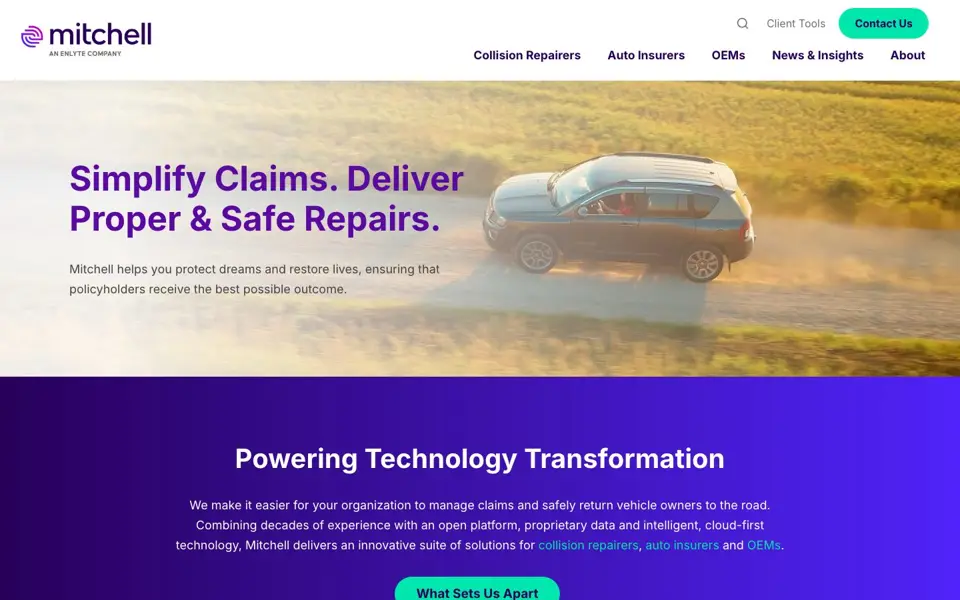
Mitchell Cloud Estimating (Mitchell collision suite)
Built For This Trade- PriceQuote only
- Mitchell Cloud Estimating from any device source
- Mitchell Intelligent Estimating builds preliminary estimates from photos source
- Diagnostics and ADAS calibration determination source
- Repair management, repair orders, production, parts source
- Mitchell Cloud Glass POS and NAGS source
Full Mitchell Cloud Estimating (Mitchell collision suite) review
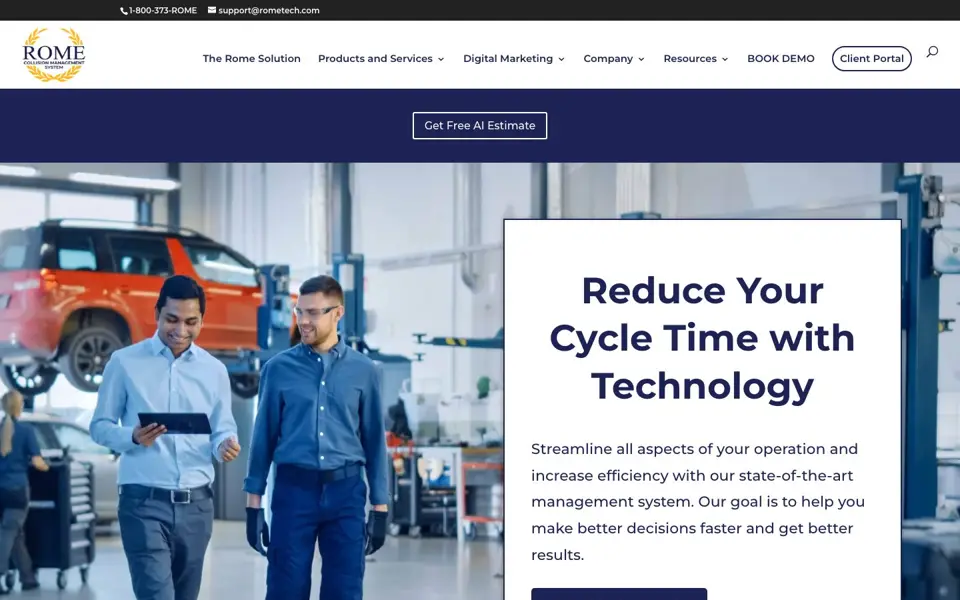
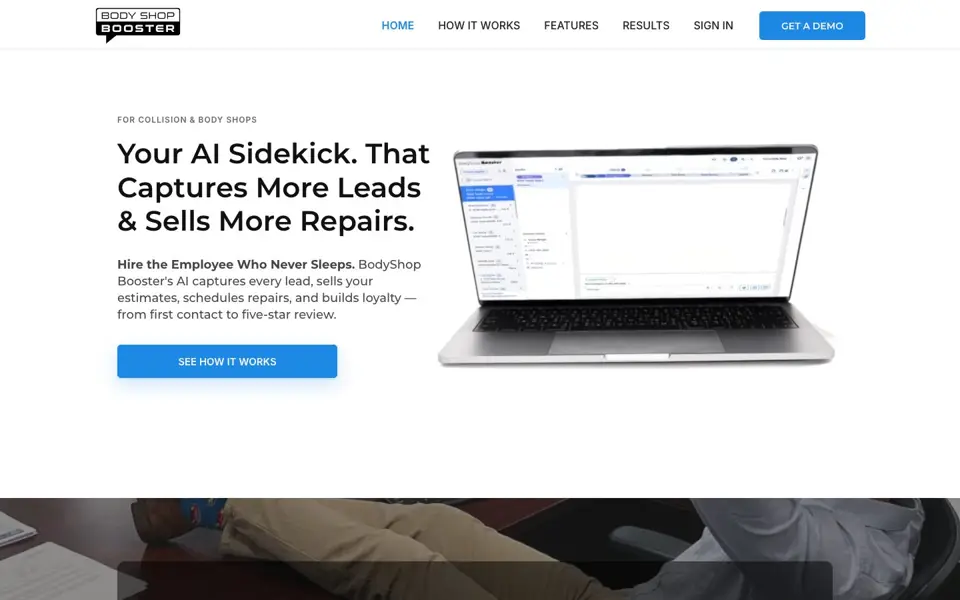
Generic Tools With A Auto Body Page
Each of these sells to many trades and has a page aimed at auto body. We screenshot that page and compare its text with the same company's pages for other trades. Sorted from most real to most swapped.

Podium
Same Page, New NameTheir headline for this trade, Meet the #1 AI Workforce For Dealerships
- PriceQuote only
- Sentences shared with its other trade pages100 percent
- Real auto body terms on the page0
The Swap, In Their Own Words
Podium publishes a auto body page. These sentences on it also appear on its pages for other trades, with only the trade word changed. We replaced the trade word with a marker so you can see it.
- grow and scale with the #1 ai employee for [trade] .
- it reviews your conversations, calls, and uploaded crm or dms lists, shows you what needs attention, builds a plan, and gets to work to help you hit your numbers.
- it has access to all of the critical information needed to build reports, to make suggestions; things that are going to grow your business.
What A Auto Body CRM Must Do
Estimating System Link
Your estimate lives in CCC, Mitchell or Audatex. If the shop software cannot pull that estimate in, someone types every line twice, and the numbers never match. When the supplement comes through, the repair order should update too. Without this link, your office manager spends half the day copying numbers between screens.
Demo test. Ask them to import a real estimate file from your estimating system and then import a supplement on top of it.
Insurance And Deductible Split
One repair order has two payers. The customer owes the deductible and the insurer owes the rest, and they pay at different times. A generic invoice treats it as one bill to one person. You need to track what each party owes, what came in, and which insurer checks are still out.
Demo test. Create a job with a 500 dollar deductible and an insurance balance, then post a partial insurance payment and see how the balance shows.
Production Board By Stage
Every car in the building is in a stage like waiting on parts, body, paint, reassembly or calibration. You need a board everyone can see so cars do not sit. Without it, a car ready for paint waits two days because nobody noticed, and your cycle time goes up.
Demo test. Move a car from body to paint on the board and check that the paint tech sees it right away on their screen.
Supplement Tracking
Almost every real collision job has a supplement once the car is torn down. You need to know which supplements are sent, which are approved and how long each insurer takes. If supplements live in someone's email, cars sit waiting on approvals nobody is chasing.
Demo test. Add a supplement to a job and see if the system shows it as pending and reminds you when it has not been approved.
Customer Status Texts
Body shop customers call over and over because they have no car. Automatic texts when the car moves to paint or is ready cut those calls way down. Generic CRMs send marketing blasts, not repair status. Without status texts your front desk spends the day on the phone answering where is my car.
Demo test. Change a job stage and see if the customer gets a text with no one typing it.
Photos And Calibration Records
Insurers want photos of damage, teardown and finished work. Modern cars also need camera and sensor calibration, and you need proof it was done. All of it should sit on the repair order, not on a tech's phone. If a claim is disputed later, you need that record fast.
Demo test. Upload photos from a phone to a repair order and attach a calibration report PDF, then find both a week later.
Signs It Is Generic
- Calls a repair order a deal or a ticket with no insurer field
- Has one bill to field and no way to split deductible and insurance
- Talks about leads and pipeline but never cycle time or supplements
- Cannot import an estimate from any estimating system
- Shows a calendar of appointments instead of a production board
Systems It Should Connect To
- CCC ONE
- Mitchell Cloud Estimating
- Audatex
- CARFAX
- PartsTrader
- OEConnection
- Enterprise Rent A Car
- QuickBooks
- I CAR training records
What It Costs
Body shop software is often priced per location per month, and sometimes by the number of users or repair orders. Estimating software is usually a separate bill from the shop management system. Parts ordering networks, texting, payments and calibration tools may each add their own cost. Many vendors quote only after a demo, so ask for every add on in writing before signing.
Tradesmen Reviews
We have no public auto body threads logged yet.
How People Search For This
Monthly Google searches in the United States, {SEEN}. Cost is what advertisers pay per click, which shows how hard vendors fight for that search.
| Search | Per month | Ad cost per click |
|---|---|---|
| collision repair software | 590 | $45.15 |
| collision repair estimating software | 260 | $88.96 |
| auto body shop estimating software | 140 | $45.01 |
| auto body shop software | 70 | $57.74 |
| auto body shop management software | 20 | $31.61 |
| collision repair management software | 20 | $40.61 |
| auto body shop invoicing software | 10 | |
| best auto body shop software | 10 | |
| collision repair scheduling software | 10 |
Questions People Ask
What software do auto body shops use?
Most body shops run estimating software like CCC, Mitchell or Audatex, then a shop management system for production, parts and payments. The key is that the two talk to each other. Some shop systems are built around collision work and import estimates. Others are made for mechanical shops and do not handle insurance well, so ask before you buy.
Is a body shop management system different from a mechanic shop system?
Yes. Collision work has insurance payers, supplements, deductibles, long cycle times and production stages like paint. Mechanical shop software is built for quick repair orders paid by one customer. Some tools try to do both. If most of your work is insurance collision, pick one that imports estimates and splits payments.
How can a body shop cut cycle time?
Most lost days come from waiting on parts, supplements and approvals that nobody is chasing. A production board that shows every car's stage and how long it has sat helps a lot. So do supplement reminders and parts tracking. Software does not fix the work, but it shows you where cars are stuck.
Can body shop software text customers updates?
Many can, and it is worth having. The best setup sends a text when the car changes stage, like parts arrived or ready for pickup. That cuts down on calls asking where the car is. Check whether the texts go out by themselves or someone has to click send each time.
How do I track insurance payments in a body shop?
You need software that lets one repair order have two payers. The customer pays the deductible, the insurer pays the rest, and each payment is posted on its own. Then you can run a list of insurance money still owed and how old it is. Without that, checks slip through the cracks.
Do body shops need a CRM for marketing?
It helps for reviews and repeat business, but your main work comes from insurers, tow drivers and word of mouth. A body shop system that sends status texts and review requests after delivery covers most of it. A sales style CRM with deal stages does not fit how collision work comes in.
Other Trades
CRM For RoofingCRM For Auto RepairCRM For HVACCRM For PlumbingCRM For ElectricalCRM For LandscapingCRM For Pest ControlCRM For CleaningCRM For Pool ServiceCRM For LocksmithCRM For TowingCRM For Garage DoorCRM For PaintingCRM For Pressure WashingCRM For Tree ServiceCRM For MovingCRM For Appliance RepairCRM For SolarCRM For General ContractorCRM For HandymanCRM For Junk RemovalCRM For Carpet CleaningCRM For Window CleaningCRM For FlooringCRM For ConcreteCRM For FencingCRM For Bail BondsCRM For RestorationCRM For Home InspectionCRM For Tire ShopCRM For SepticCRM For ChimneyCRM For IrrigationCRM For Snow RemovalCRM For Mobile MechanicCRM For Diesel Repair