Landscaping CRM and software, checked November 2026
CRM For Landscaping
10 CRMs built only for landscaping and 14 multi trade CRMs that publish a landscaping page. We compared each landscaping page against the same vendor's other trade pages. 4 of 14 read like the same page with the trade name swapped.
Built for the trade
10
Generic vendors with a page
14
Pages that were swapped
4 of 14
Top search
landscaping software, 1,600 a month
How A Landscaping Job Actually Moves
Landscaping has two sides. Maintenance is the recurring work, like weekly or every other week mowing, edging, blowing and seasonal cleanups. Customers sign up for a season or a full year, and crews run the same routes every week. Install and enhancement work is project based, like a new patio, plantings, sod or lighting, with a site visit, a measured estimate, a design and a deposit. The office builds routes so crews do not zigzag across town, moves the whole schedule when it rains, and adds extras like aeration, mulch and leaf cleanup. Crew leaders clock in, log time and materials at each property, and take a photo when they finish. Maintenance is often billed monthly or as a flat seasonal price split into equal payments. Installs get billed by deposit and milestones. Many shops also run snow in winter using the same customer list.
Built For Landscaping
These tools were made for landscaping businesses first. Their screens use your words, not sales words.
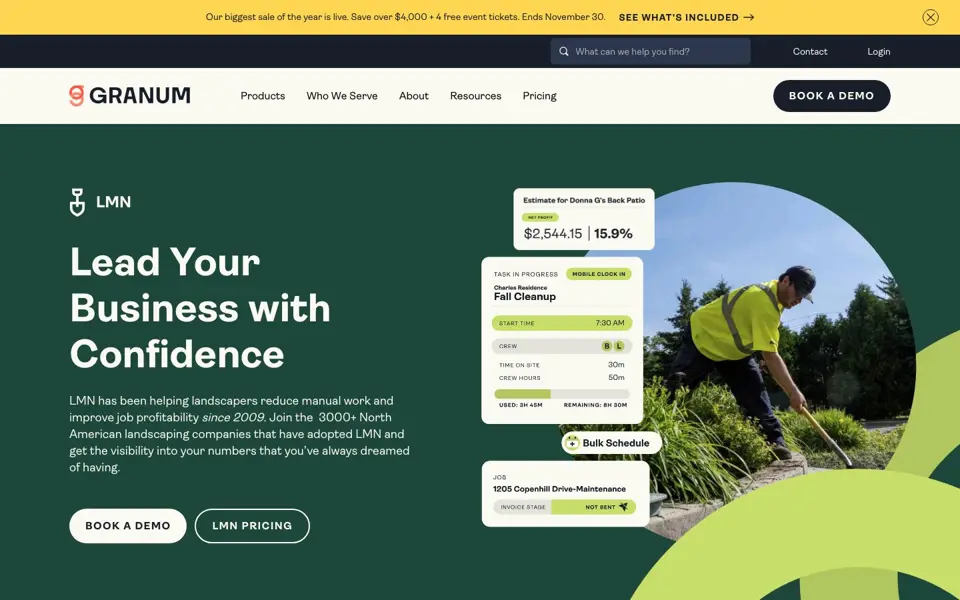
LMN by Granum home page, as captured November 2026
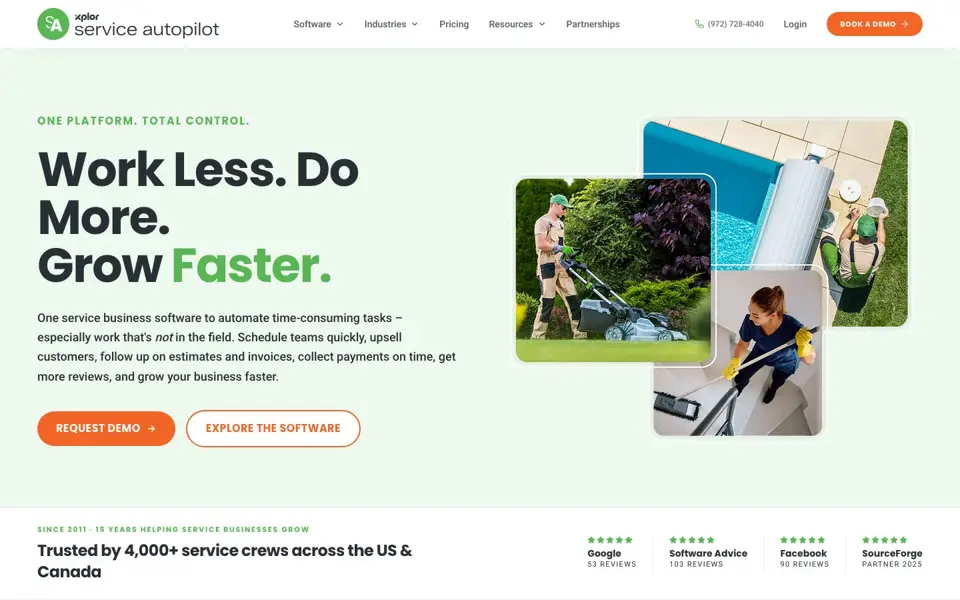
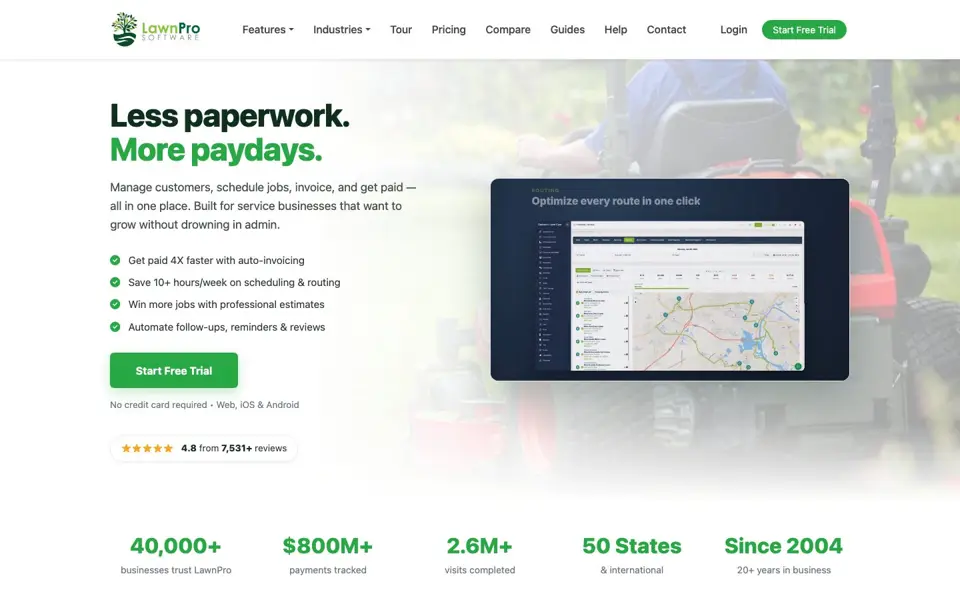
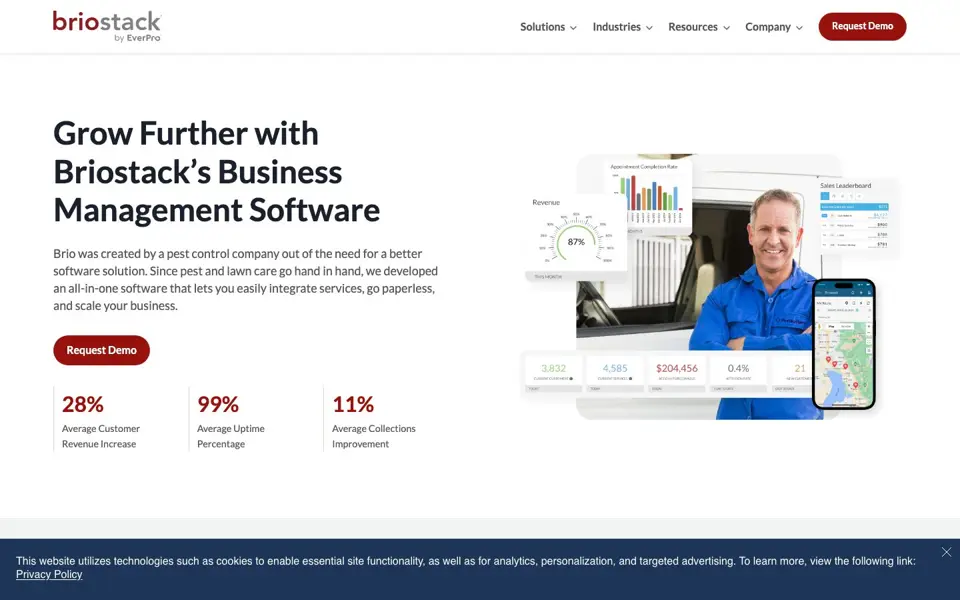
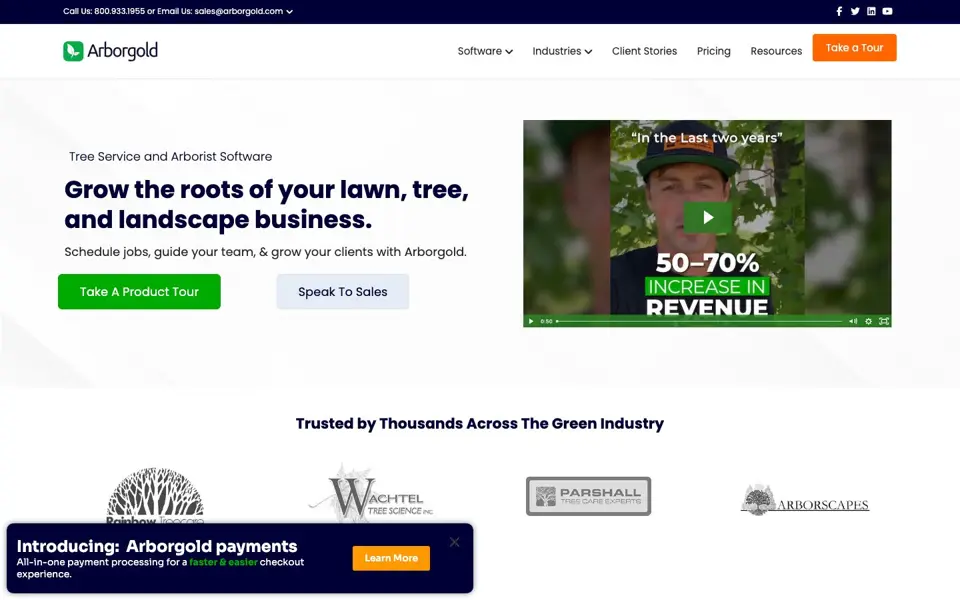
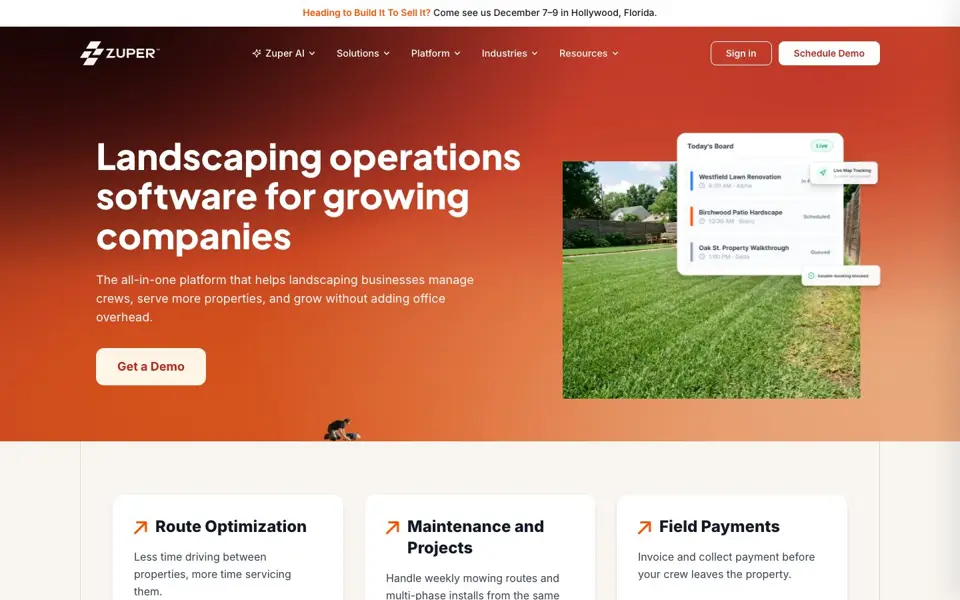
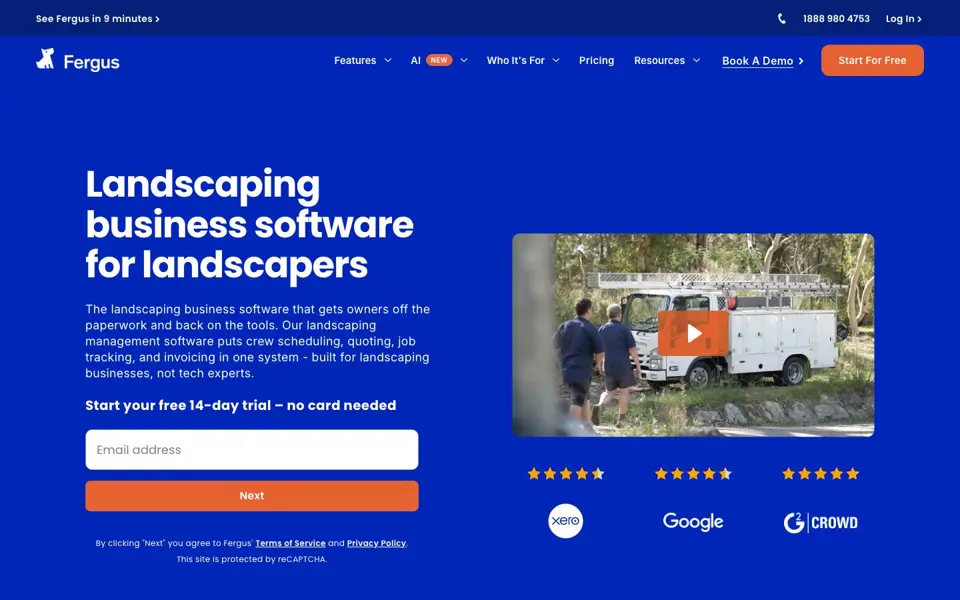
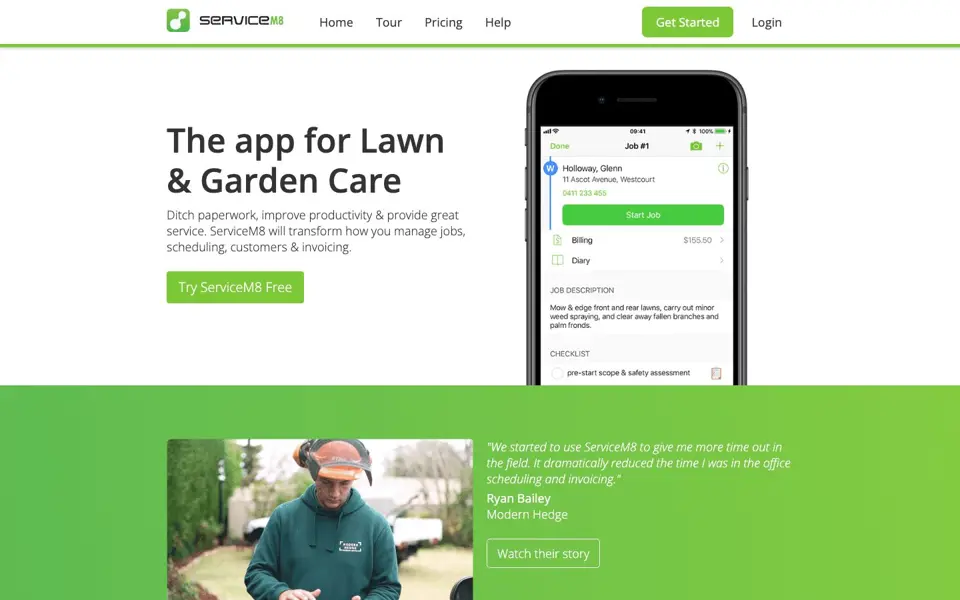
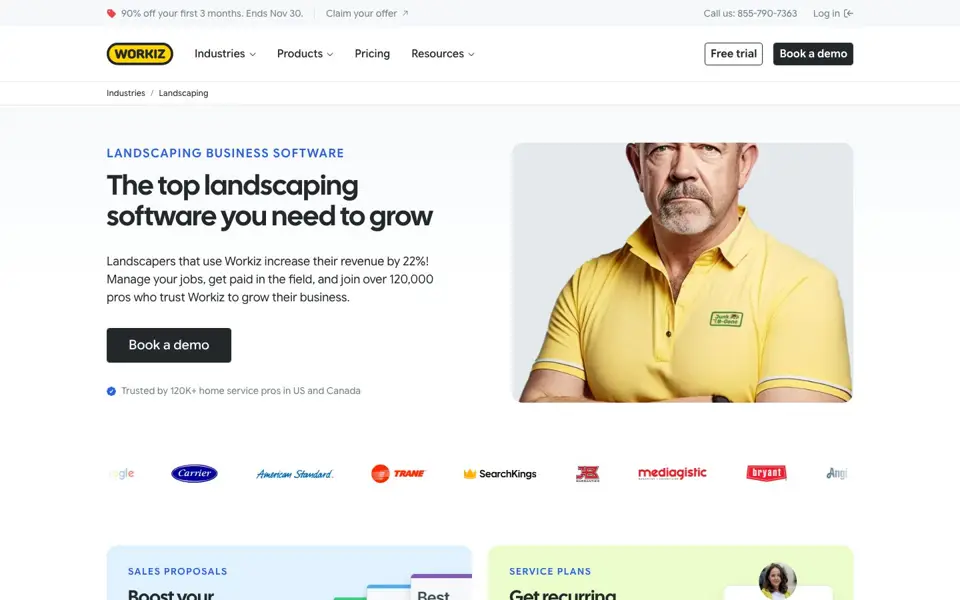
Each of these sells to many trades and has a page aimed at landscaping. We screenshot that page and compare its text with the same company's pages for other trades. Sorted from most real to most swapped.
Markate page for landscaping, as captured November 2026
HighLevel (GoHighLevel) publishes a landscaping page. These sentences on it also appear on its pages for other trades, with only the trade word changed. We replaced the trade word with a marker so you can see it.
learn how to leverage highlevel for the [trade] industry!
Maintenance money comes from running tight routes week after week. The tool should build routes by day and by crew, put stops in a smart driving order and roll them forward every week. Without it, the office rebuilds the schedule by hand every Monday, and crews burn fuel and hours crossing town.
Demo test. Ask them to build a Tuesday route for one crew and show it repeat next week with the stops in driving order.
Property Measuring From a Map
Pricing a mow or a mulch job depends on turf area, bed size and slope. A good tool lets you measure a property from a satellite map and price from those numbers. Without it, someone drives out to every lead just to quote, or guesses and loses money on the big lots.
Demo test. Ask them to measure a real address on a map in the demo and turn it into a priced estimate.
Rain Day Rescheduling
Rain does not move one job, it moves a whole day of routes. The tool should push a full route forward and shift what is behind it without breaking the rest of the week. Without it, the office spends the morning calling customers and dragging stops around one at a time.
Demo test. Ask them to push all of Wednesday's routes one day for rain and show what happens to Thursday.
Crew Time by Property
You need to know how long each property actually takes, not just how long the crew was out. Crew leaders should clock in and out at each stop. Without it, you never find the customer who is costing you money because the yard takes twice as long as you priced it for.
Demo test. Ask for a report showing budgeted time against actual crew time for each property on one route.
Seasonal Contracts and Billing
Many customers pay a flat season price split into equal monthly payments, or pay ahead for the year. The tool has to handle contracts, autopay and extras billed on top. Without it, you invoice by hand every month, miss the add ons, and argue about what the season price covered.
Demo test. Ask them to set up a seasonal contract split into eight equal payments plus a one time cleanup.
Upsells and Enhancements
Aeration, overseeding, mulch, cleanups and lighting are where margin hides. The tool should let crews flag opportunities from the field and let the office send quick quotes to the whole route. Without it, crews notice the bare beds every week and nobody ever sells the mulch job.
Demo test. Ask them to send an aeration quote to every customer on a route and show who accepted it.
Signs It Is Generic
Books each weekly mow as a separate appointment instead of a route
Calls a maintenance customer a won deal with one dollar amount
Has no map based measuring or property size fields
Cannot move a full route for rain in one step
Has no crew time tracking per property, only per day
Systems It Should Connect To
Go iLawn
SiteRecon
Google Maps
SiteOne Landscape Supply
Ewing Irrigation
QuickBooks
What It Costs
Landscaping software is often priced per user or per crew per month, and some tools price by number of active customers or properties. Measuring tools, route optimizing and marketing features can be extra. Some vendors quote only after a demo. Ask whether seasonal crew members count all year, and whether you can drop users in the off season without losing your data.
Tradesmen Reviews
Public threads where landscaping owners and techs talk about the CRMs they run. Each links to the original so you read it in their words.
Jobber, WorkWaveLandscapingReddit r/sweatystartup about 2024
Monthly Google searches in the United States, {SEEN}. Cost is what advertisers pay per click, which shows how hard vendors fight for that search.
Search
Per month
Ad cost per click
landscaping software
1,600
$37.99
best landscaping software
590
$16.70
lawn care software
390
$89.24
landscaping business software
320
$94.11
landscaping management software
320
$64.44
crm for landscaping
260
$81.37
landscaping crm
260
$81.37
landscaping estimating software
260
$80.33
lawn care business software
210
$78.18
crm for lawn care
140
$55.21
lawn care crm
140
$55.21
landscaping crm software
110
$125.86
Questions People Ask
What is the best software for a lawn care business?
For a lawn care or maintenance shop, the big needs are recurring routes, crew time tracking, rain day moves and easy monthly billing. If you also do installs, add estimates with measuring and project billing. Bring a real route to the demo and ask them to build it, then move it for rain. That will show you more than the feature list.
How do landscapers plan routes?
Most landscapers group properties by area and day, then put stops in driving order for each crew. Good software builds the route, shows it on a map, and repeats it every week. When a customer cancels or a new one signs up, it fits them into the right day. Without software, routes live in someone's head.
Can landscaping software measure lawns from a map?
Some landscaping tools can measure turf, beds and hard surfaces from satellite images, either built in or through a measuring service. That lets you quote without driving out. Ask how close the measurements are on a property you already know, and whether the numbers flow straight into the estimate or have to be typed in.
How should a landscaping company bill maintenance customers?
Many shops bill a flat monthly amount or split a season price into equal payments, with card on file autopay. Others bill per visit. Extras like cleanups and mulch go on top. Good software handles all of these without you building invoices by hand. Ask to see a seasonal contract with autopay set up in the demo.
Does landscaping software handle design and install jobs?
Some do and some are built only for maintenance. Install work needs measured estimates, options, deposits, material lists and milestone billing. If installs are a big part of your business, test that flow in the demo. A tool that is great at mowing routes can be weak at a patio job that runs for two weeks.
Can landscaping software track crew hours by property?
Better tools let crew leaders clock in and out at each stop from a phone, so you see how long each property really takes. That is how you find the accounts you underpriced. Ask whether the clock in uses GPS, whether it works without a signal, and whether the report compares actual time to the time you priced.