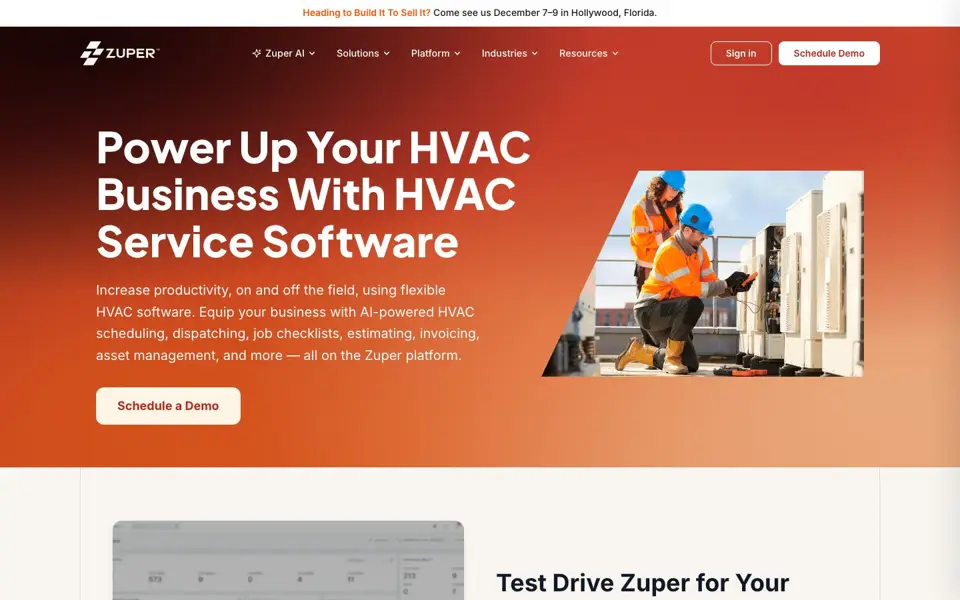
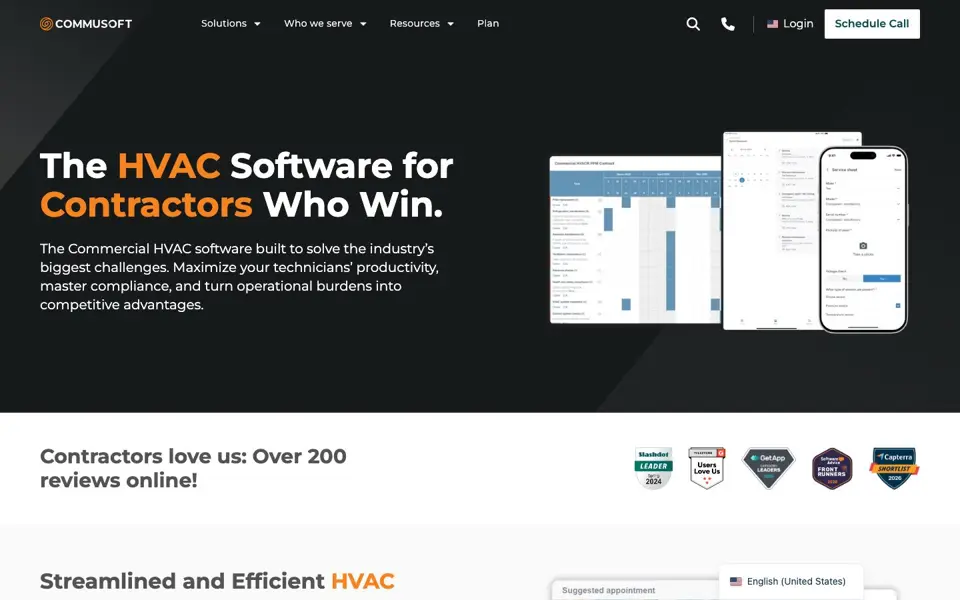
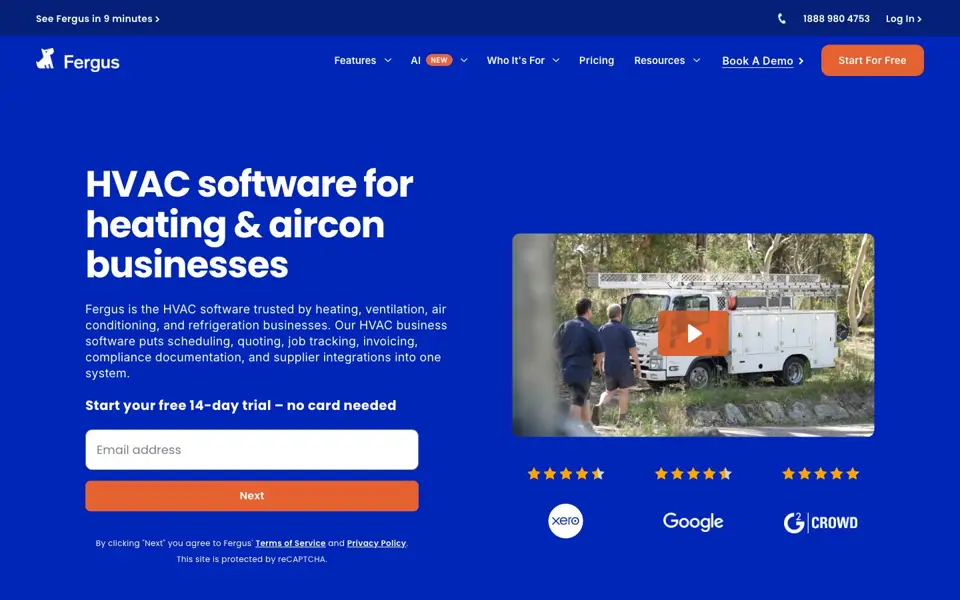
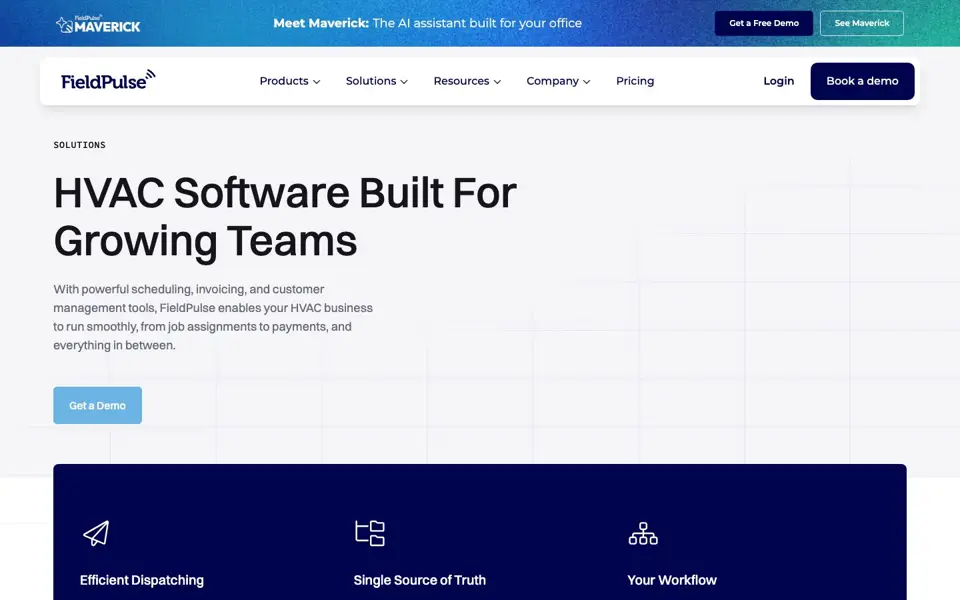
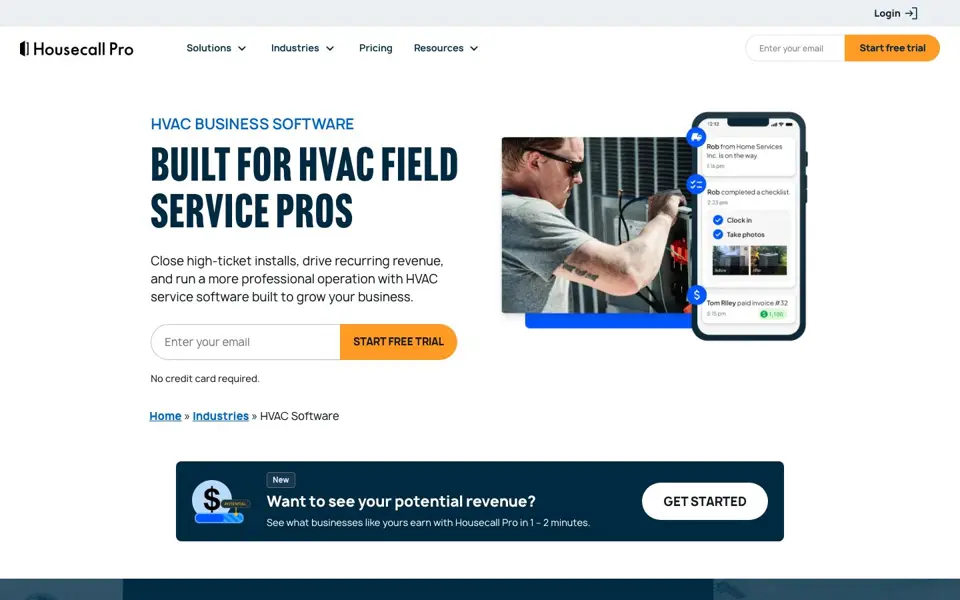
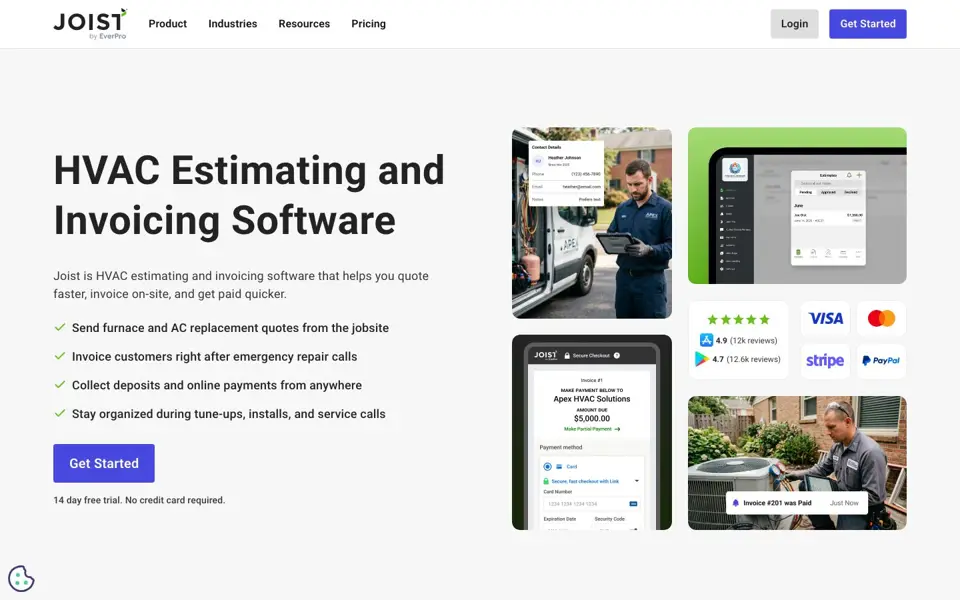
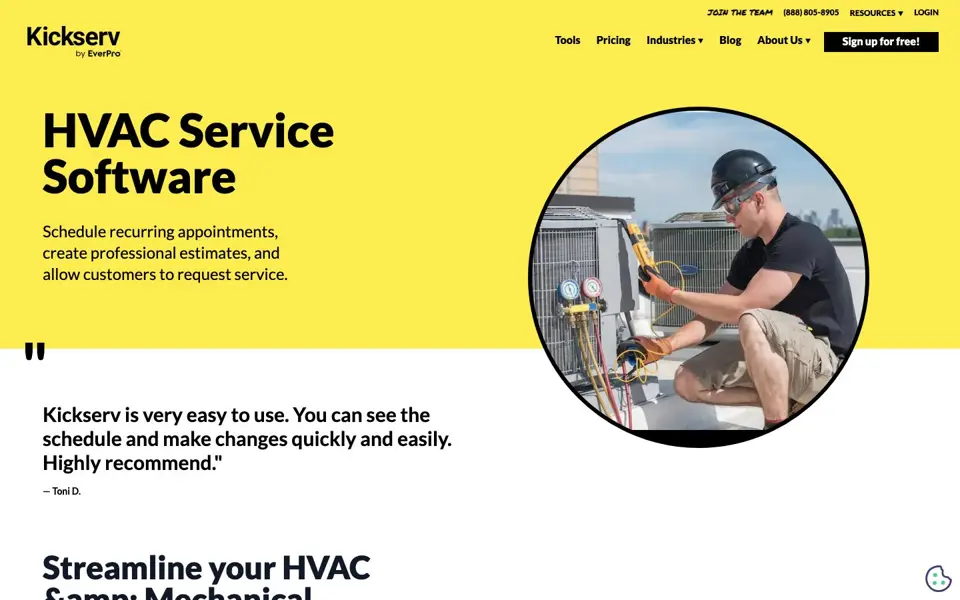
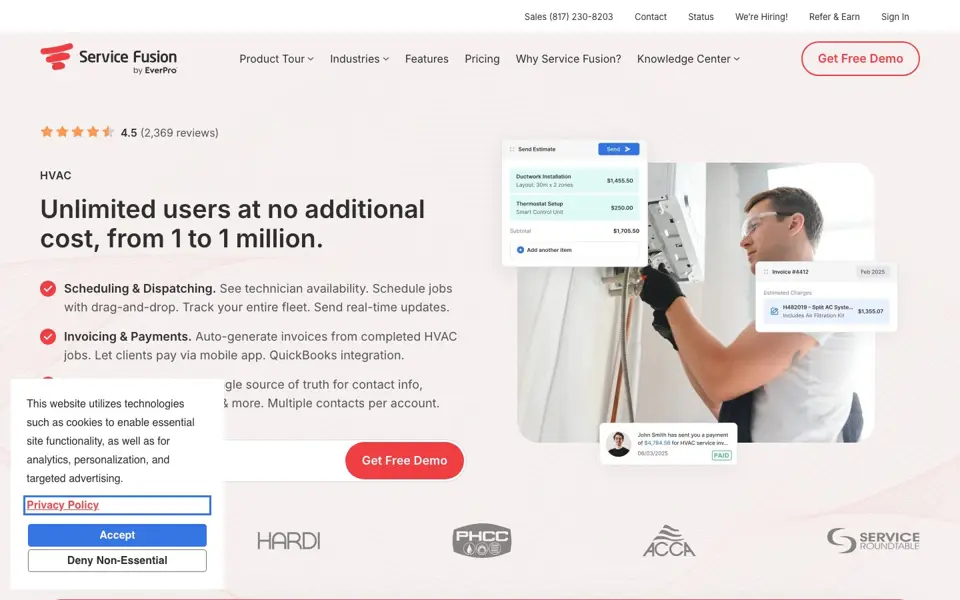
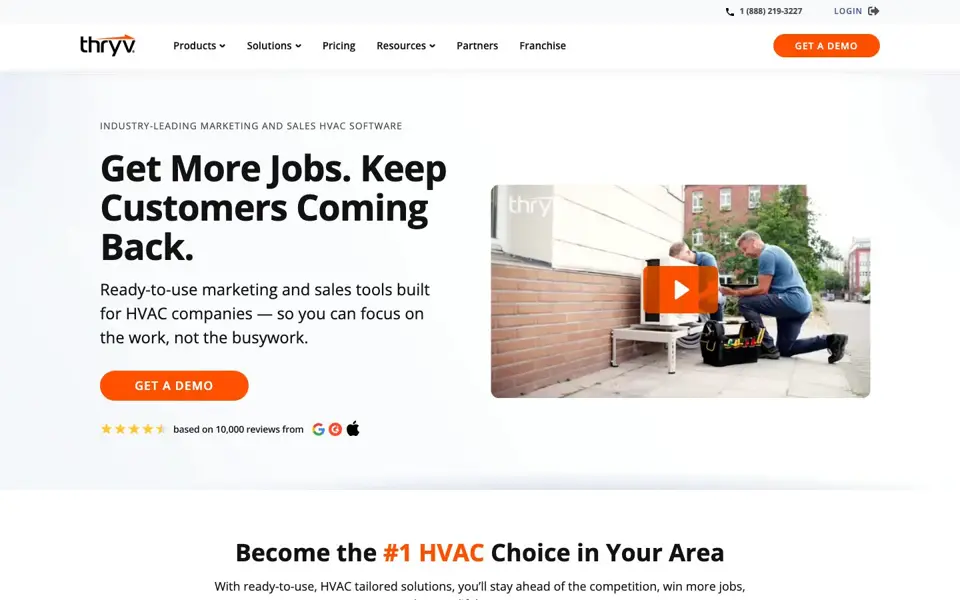
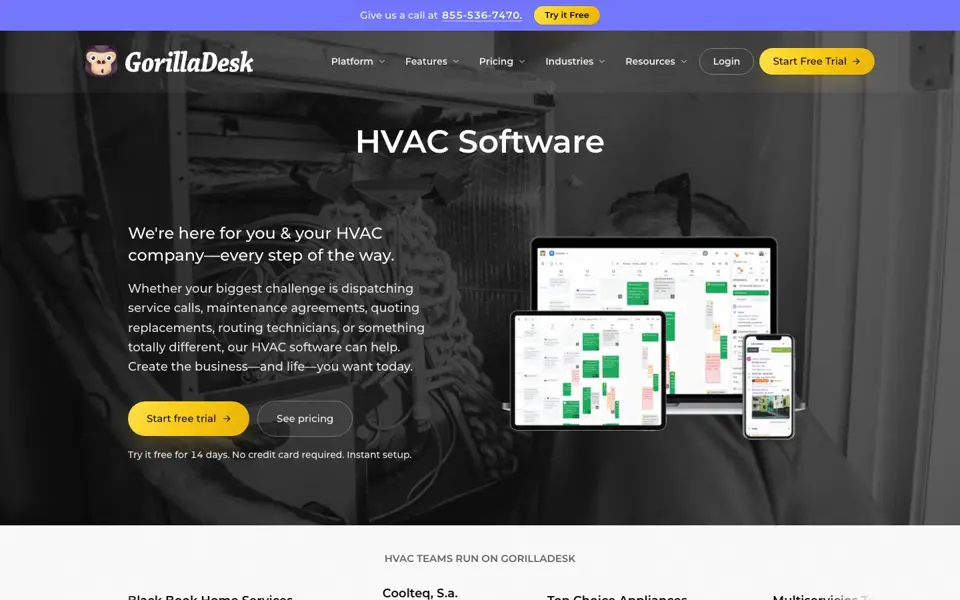
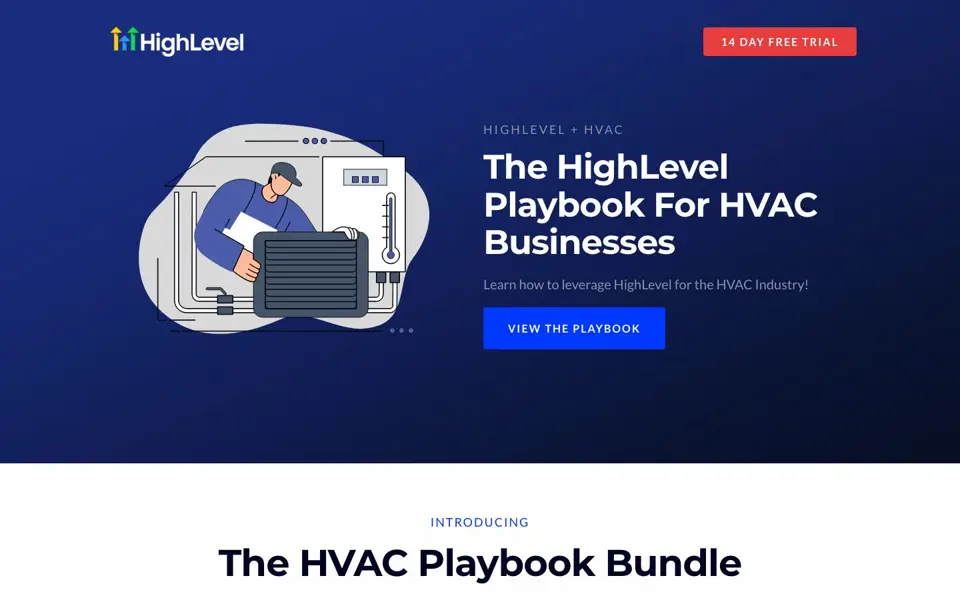
3 CRMs built only for hvac and 18 multi trade CRMs that publish a hvac page. We compared each hvac page against the same vendor's other trade pages. 7 of 18 read like the same page with the trade name swapped.
Built for the trade
3
Generic vendors with a page
18
Pages that were swapped
7 of 18
Top search
hvac software, 590 a month
How A HVAC Job Actually Moves
Most HVAC work starts with a call that something quit, a no heat call in January or a no cool call in July. The dispatcher books it, picks a tech by skill and location, and the tech gets the address, equipment history and notes on a phone. On site, the tech finds the problem and shows prices from a flat rate price book with options, from a simple repair up to a full system replacement. Small repairs get done right then. A replacement turns into a sales visit with sizing, equipment choices, financing and rebates, then an install day with a bigger crew. Customers on a maintenance plan get two tune ups a year, one for heating and one for cooling, booked by the office before the season hits. The tech takes payment in the field, and the job closes with the equipment serial numbers saved for warranty.
Built For HVAC
These tools were made for hvac businesses first. Their screens use your words, not sales words.
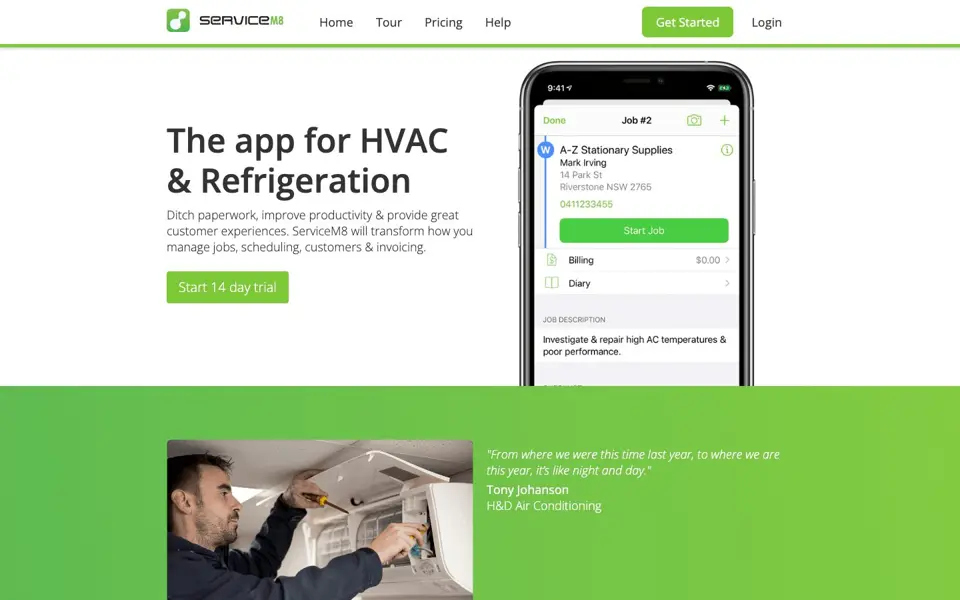
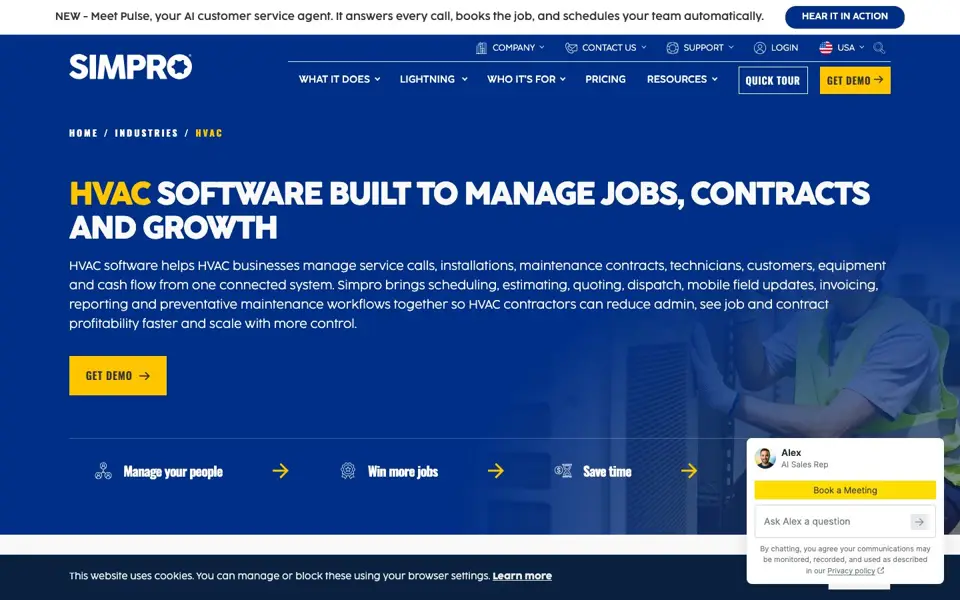
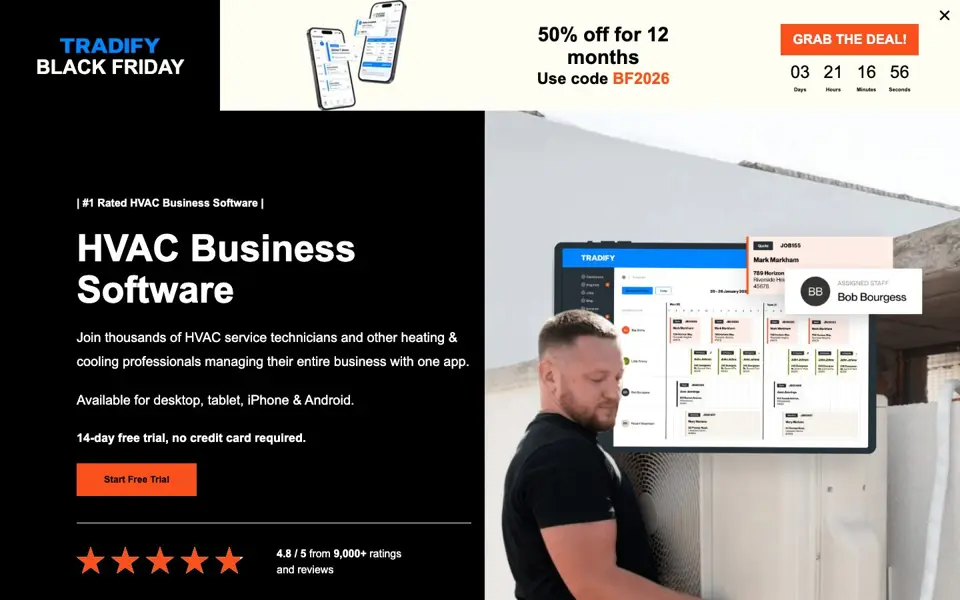
Each of these sells to many trades and has a page aimed at hvac. We screenshot that page and compare its text with the same company's pages for other trades. Sorted from most real to most swapped.
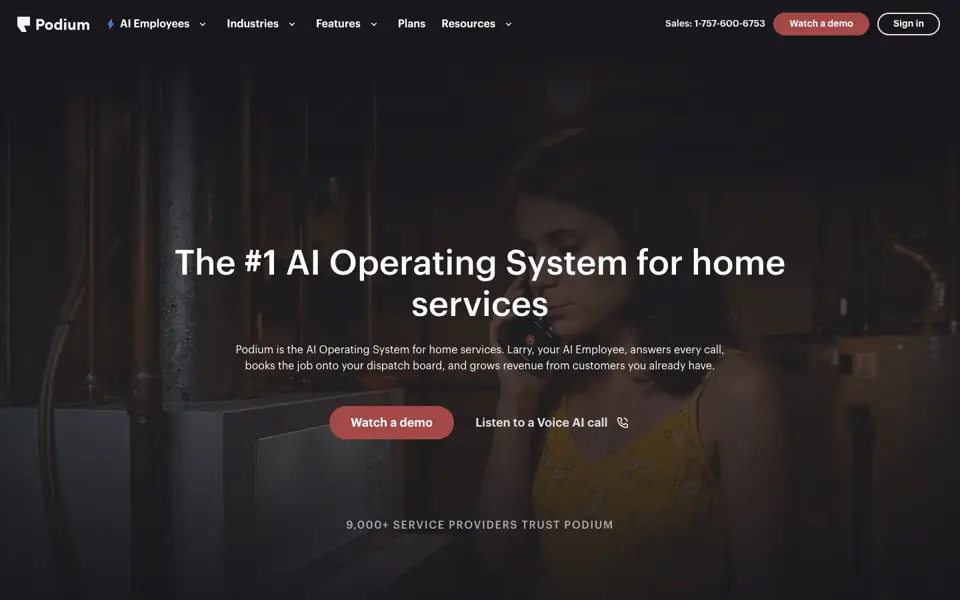
Podium publishes a hvac page. These sentences on it also appear on its pages for other trades, with only the trade word changed. We replaced the trade word with a marker so you can see it.
operator is podium’s ai business manager for [trade] businesses.
learn to grow revenue with the #1 ai employee for [trade] .
most [trade] businesses lose 40% of leads after-hours.
HVAC techs sell from a price book, not from a calculator. Each task has a set price built from parts and labor, with options from basic to best. Without it, techs make up prices in the driveway, two customers pay different amounts for the same fix, and your margin drops with every new hire.
Demo test. Ask them to load a price book item with parts and labor and show a tech presenting three options on a tablet.
Maintenance Agreements
Service plans are the steady money in HVAC. The tool has to track who is on a plan, when visits are due, what discount they get and when the plan renews. A generic CRM cannot book two seasonal visits per member or bill the plan every month, so members quietly fall off and nobody notices.
Demo test. Ask them to pull every plan customer due for a fall tune up and book them in bulk.
Equipment History by Address
Techs need to know the make, model, serial number, age and refrigerant of the unit before they walk in. That history should stay with the address even when the house sells. Without it, techs waste time copying data plates in the attic, and warranty claims stall because nobody saved the install date.
Demo test. Ask them to open a house and show its furnace and condenser with serial numbers, install date and past calls.
Dispatch Board by Skill and Zone
Not every tech can run a commercial rooftop unit or a heat pump install. The board should show who is free, where they are and what they are trained for. During a heat wave with forty calls stacked up, a dispatcher who cannot see this sends the wrong tech across town.
Demo test. Ask them to drop an emergency call onto the board and show how it finds the closest tech who can do the work.
Replacement Proposals With Financing
System replacement is the big ticket. Customers want to compare systems, see a monthly payment and know which rebates apply. The tool should build tiered proposals and start a financing application without the tech typing everything twice. If the sale waits on an office callback, the homeowner calls the next company.
Demo test. Ask them to build a proposal with three systems and show the monthly payment and an on screen signature.
Peak Season Call Handling
HVAC demand comes in waves. In peak season the phones ring nonstop, and the tool has to handle booking, call priority and wait times without the board falling apart. In the slow months it should help you fill the schedule with tune ups and plan visits so techs are not sitting at home.
Demo test. Ask how the system handles a day with triple the normal call volume and what the office sees on screen.
Signs It Is Generic
Calls a no heat call a lead with a deal value
Has no place for equipment, serial numbers or refrigerant type
Recurring billing exists but cannot book seasonal maintenance visits
Prices are typed as line items instead of pulled from a price book
The demo shows a marketing funnel instead of a dispatch board
Systems It Should Connect To
Johnstone Supply
Ferguson
Carrier
Trane
Goodman
AHRI Directory
Service Finance Company
Synchrony
Google Local Services Ads
QuickBooks
What It Costs
HVAC software is mostly priced per tech or per field user per month, with office users sometimes counted separately. Bigger platforms usually quote only after a demo, often want a yearly contract, and may charge for setup and training. Price books, marketing tools and call tracking are often extra. Ask about seasonal techs, since some tools bill you for every user all year even if you only run them in summer.
Tradesmen Reviews
Public threads where hvac owners and techs talk about the CRMs they run. Each links to the original so you read it in their words.
Monthly Google searches in the United States, {SEEN}. Cost is what advertisers pay per click, which shows how hard vendors fight for that search.
Search
Per month
Ad cost per click
hvac software
590
$123.52
crm for hvac
260
$145.49
hvac crm
260
$145.49
hvac estimating software
260
$147.54
hvac management software
210
$279.81
hvac scheduling software
170
$174.92
hvac business software
140
$80.93
hvac crm software
140
$144.34
hvac invoicing software
140
$338.99
best hvac software
90
$191.67
best crm for hvac
20
$230.17
Questions People Ask
What software do HVAC companies use?
Most HVAC companies use field service software that handles booking, dispatch, a price book, maintenance plans and payments in one place. Some add a separate CRM for marketing and follow up. The core needs are equipment history, seasonal plan visits and options based pricing. A plain sales CRM without dispatch or equipment records will not run an HVAC shop on its own.
Do I need a flat rate price book in HVAC software?
If you have more than one tech, it helps a lot. A price book keeps prices the same no matter who is on the call, and it lets techs show options instead of one number. Ask whether the software lets you build your own book, import one, and update prices when supplier costs change, without editing every item by hand.
How do HVAC companies manage maintenance agreements?
Good HVAC software tracks each plan member, the visits they are owed, their discount and their renewal date. The office pulls a list before each season and books tune ups in bulk. Billing can run monthly or yearly. Without this, plan visits get missed, members do not renew, and you lose the steady work that carries you through slow months.
Can HVAC software help sell system replacements?
Yes, if it has proposal tools. The tech or comfort advisor builds tiered options with equipment, price and monthly payment, and the customer can sign on the spot. Some tools also start a financing application. Ask to see a full replacement proposal built in the demo, from equipment choice to signature, before you believe the claim.
What is the best HVAC software for a small business?
For a small shop, look for quick booking, a simple dispatch board, a price book, maintenance plans and easy payments. You may not need advanced reporting or call center tools yet. Pick something your techs will actually use in the field. If they skip the app and call the office instead, the software is not doing its job.
Does HVAC software work offline in attics and basements?
Some apps work offline and sync when the signal comes back, and some just spin and fail. Techs lose service in basements, crawl spaces and big commercial buildings all the time. Ask the vendor to put a phone in airplane mode during the demo and show that notes, photos and the invoice still save and sync later.